
The dairy industry remains one of the largest agricultural subsectors in Kenya and continues to play a major role in food security, employment creation, rural livelihoods, industrial development, and agribusiness growth. Dairy farming supports millions of households directly and indirectly through production, transportation, processing, packaging, distribution, retail, and value-added dairy products.
As the sector evolves amid rising demand for dairy products, climate variability, changing consumer behavior, technological transformation, and increasing pressure on food systems, stakeholders across the dairy value chain continue to seek sustainable, scalable, and commercially viable solutions that can strengthen productivity and competitiveness.
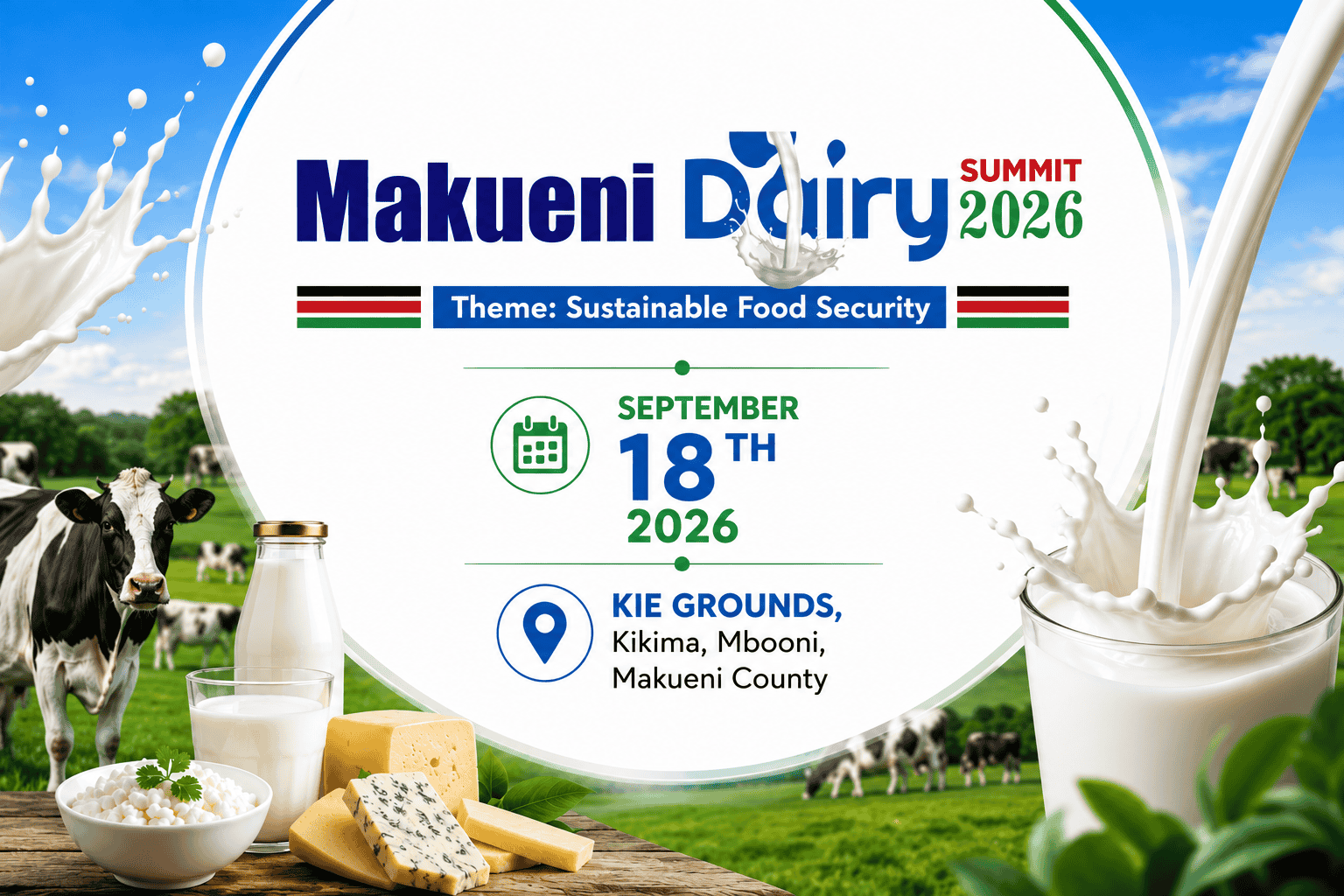
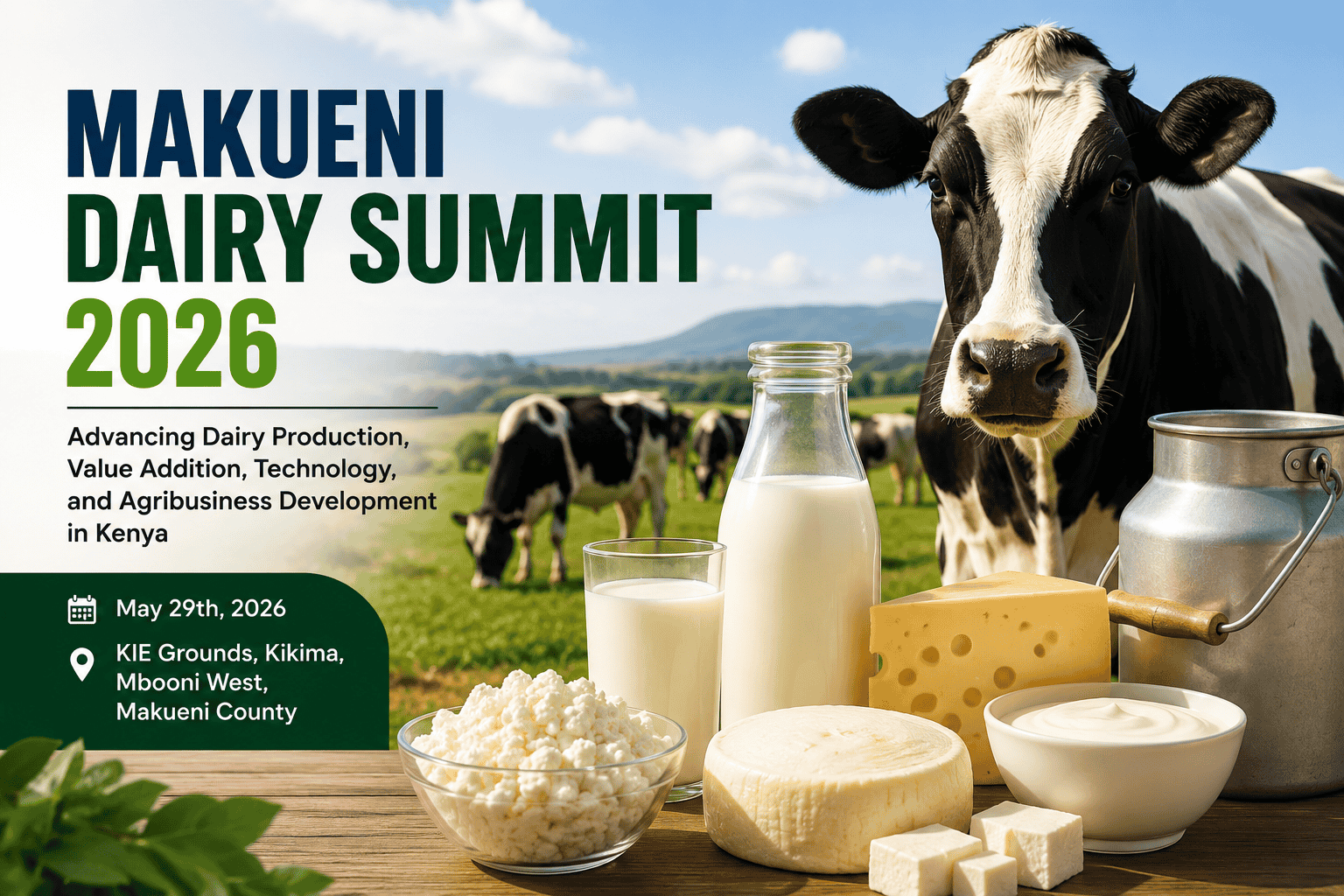
The Makueni Dairy Summit 2026, scheduled for May 29th, 2026 at the KIE Grounds, Kikima, Mbooni West, Makueni County, will convene stakeholders from across the dairy and agribusiness ecosystem to discuss the future of dairy production, processing, sustainability, innovation, investment, market access, and industrialization.
The summit will bring together dairy farmers, processors, cooperatives, policymakers, financial institutions, investors, agritech companies, logistics providers, researchers, development organizations, and agribusiness leaders to address opportunities and challenges shaping the dairy industry in Kenya and the wider East African region.

The Strategic Importance of the Dairy Sector
The dairy industry contributes significantly to agricultural GDP and remains one of the most commercialized agricultural subsectors in Kenya. Milk and dairy products continue to form an essential component of household nutrition and food systems while also creating employment opportunities across rural and urban economies.
The dairy value chain includes multiple interconnected sectors such as:
• Dairy farming and livestock production
• Feed manufacturing and distribution
• Veterinary and animal health services
• Genetics and breeding programs
• Milk collection and aggregation
• Cold chain and transportation systems
• Dairy processing and packaging
• Retail and distribution networks
• Financial and insurance services
• Research, training, and extension services
• Quality assurance and regulatory systems
Growth within the dairy industry directly impacts food systems, manufacturing, rural incomes, youth employment, women-led agribusinesses, and agricultural commercialization.
Makueni County’s Dairy Development Landscape
Makueni County continues to strengthen its dairy production ecosystem through investments in infrastructure, processing capacity, farmer support programs, and dairy commercialization initiatives.
The county currently produces approximately 40 million litres of milk annually, with production levels remaining relatively stable due to improved pasture conditions and water availability in some production zones.
The development of “Makueni Fresh,” the county’s dairy brand, reflects ongoing efforts toward value addition, processing, branding, and local market development.
The county has also invested in dairy infrastructure aimed at strengthening production efficiency and reducing post-harvest losses. These investments include:
• Milk coolers and chilling facilities
• Pasteurization equipment
• Milk transportation systems
• Mini-processing plants
• Dairy collection centers
• Market linkage initiatives
The commissioning of the Kikima Dairy Plant has expanded local milk processing capacity while providing a more structured market for dairy farmers within the region.
Makueni County has also implemented subsidized Artificial Insemination (AI) programs aimed at improving dairy genetics, increasing productivity, and enhancing herd quality among farmers.
These initiatives form part of broader efforts to strengthen dairy commercialization and improve household incomes through livestock production.
Dairy Production and Food Security
Dairy production remains closely linked to food security, nutrition, and economic resilience. Milk is a key nutritional product consumed across households and institutions including schools, hospitals, hotels, and food processing industries.
However, many dairy-producing regions continue to face production constraints such as:
• Limited access to quality feeds
• Climate-related stress and drought
• Low productivity breeds
• Inadequate cold chain systems
• High production costs
• Limited processing capacity
• Market volatility
• Inconsistent quality standards
• Limited financing access
• Disease management challenges
These challenges continue to create gaps between local demand and milk supply in several regions, increasing the need for investment, innovation, and sustainable production systems.
Technology and Innovation in Dairy Farming
Technology adoption is becoming increasingly important in modern dairy systems. Across the dairy value chain, innovations are improving productivity, efficiency, quality management, traceability, and commercialization.
Technologies expected to feature during the summit include:
• Automated milking systems
• Smart feeding systems
• Digital herd management tools
• Milk testing and quality assurance technologies
• Cold chain monitoring systems
• Dairy processing equipment
• Packaging technologies
• Renewable energy systems for farms and processing plants
• Water harvesting and irrigation technologies
• Data-driven livestock management solutions
The integration of digital agriculture and precision livestock farming continues to transform dairy production models globally and regionally.
Sustainability and Climate-Smart Dairy Farming
Climate variability remains one of the biggest challenges facing agricultural systems in Africa. Dairy farming is increasingly affected by drought, water scarcity, pasture shortages, feed cost fluctuations, and environmental degradation.
Climate-smart dairy farming practices continue to gain importance in improving resilience and sustainability.
These practices include:
• Water conservation and harvesting
• Sustainable pasture management
• Silage and fodder preservation
• Climate-resilient livestock systems
• Efficient manure management
• Renewable energy adoption
• Sustainable feed production systems
• Resource-efficient dairy operations
The summit will provide a platform for discussions on sustainable dairy models capable of improving productivity while reducing environmental pressure.
Dairy Processing and Value Addition
Value addition remains one of the key drivers of dairy commercialization and profitability.
The expansion of processing capacity creates opportunities for:
• Milk preservation
• Product diversification
• Reduced post-harvest losses
• Improved quality control
• Expanded market access
• Increased farmer earnings
• Industrial growth
Processed dairy products continue to diversify beyond raw milk into products such as:
• Pasteurized milk
• Fermented milk products
• Yogurt
• Cheese
• Butter
• Cream
• Ghee
• Ice cream
• Powdered milk products
Growth in urban populations, retail expansion, hospitality industries, and changing consumer preferences continues to increase demand for processed dairy products.
Investment Opportunities in the Dairy Sector
The dairy industry continues to attract investment opportunities across multiple segments including:
• Dairy processing plants
• Cold chain infrastructure
• Feed manufacturing
• Animal health services
• Livestock genetics
• Agritech platforms
• Dairy logistics and transportation
• Packaging solutions
• Renewable energy systems
• Water and irrigation infrastructure
Financial institutions, investors, development organizations, and agribusiness firms continue to play a major role in financing dairy sector expansion and modernization.
Market Access and Regional Trade
Regional trade integration continues to create opportunities for dairy products within East Africa and beyond. Expanding populations, urbanization, and growing middle-income consumers continue to increase demand for dairy products across regional markets.
However, access to competitive markets requires improvements in:
• Quality assurance
• Certification systems
• Food safety standards
• Processing efficiency
• Packaging and branding
• Cold chain management
• Supply chain coordination
The summit will create opportunities for discussions around competitiveness, regional trade, export readiness, and market expansion.
Stakeholders Expected at the Summit
The summit is expected to attract stakeholders from across the dairy and agribusiness ecosystem including:
• Dairy farmers and cooperatives
• Dairy processors and packers
• Feed manufacturers and distributors
• Veterinary and animal health companies
• Livestock genetics providers
• Dairy equipment suppliers
• Cold chain and logistics companies
• Retailers and distributors
• Government ministries and regulatory agencies
• NGOs and development organizations
• Financial institutions and insurers
• Investors and venture capital firms
• Research institutions and universities
• Agribusiness consultants and advisors
• Technology and digital agriculture companies
Sponsorship and Exhibition Opportunities
The Makueni Dairy Summit 2026 provides organizations with opportunities to showcase products, technologies, services, and innovations to a targeted dairy industry audience.
Exhibitors and sponsors will have opportunities to:
• Increase brand visibility
• Demonstrate products and technologies
• Engage potential clients and partners
• Access new markets
• Build commercial partnerships
• Generate leads and business opportunities
The summit’s exhibition platform is expected to feature organizations operating across production, processing, logistics, technology, animal health, finance, sustainability, packaging, and agribusiness development.
Registration Information
Exhibitor Registration:
http://sergeantsville.net/dairy-summit-2026-exhibitor-registration-form/
Delegate Registration:
http://sergeantsville.net/makueni-dairy-summit-2026-delegates-registration-form/
Event Details:
http://sergeantsville.net/event/makueni-dairy-summit-2026/
For sponsorship, exhibition, partnership, and marketing opportunities, interested stakeholders can contact the organizers through the official event communication channels.
The Makueni Dairy Summit 2026 is expected to provide an important platform for discussions, partnerships, technology showcase, investment engagement, and strategic collaboration aimed at strengthening the dairy industry and advancing sustainable agribusiness development in Kenya.